Kaupify guides
Do You Need an Accountant for a Small Business? | Kaupify
The jobs an accountant genuinely adds value to, and the routine paperwork you can handle yourself When it makes sense to bring one in: year-end accounts, tax questions, payroll and audits How Kaupify keeps invoices, expenses and your monthly figures tidy so either path starts from clean records
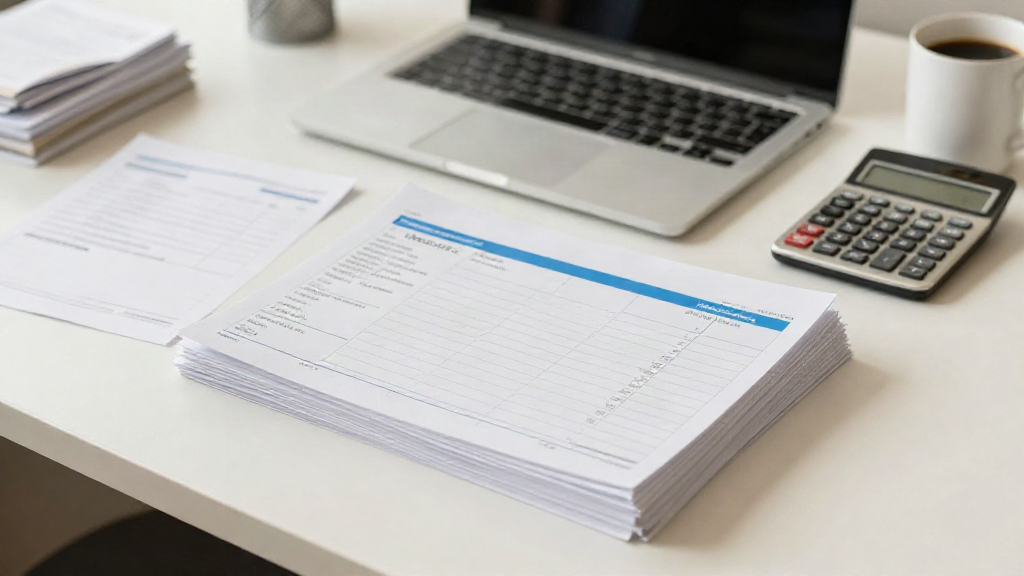
If you run a small business, the thought has probably crossed your mind while you were filing yet another pile of receipts: could I just do this myself?
The honest answer is sometimes yes, sometimes no. It depends far less on the size of your business than on what you are asking an accountant to do. Here is the plain version.
What an accountant actually does
An accountant is not a magic box that makes tax disappear. Most of the work falls into four buckets:
- Year-end accounts and the annual report
- Tax calculation and filing
- Payroll, if you have staff
- Advice when something is unusual
Everything else, the invoices, the receipts, the monthly figures, is bookkeeping. That is the raw material your accountant works from. A lot of owners assume these are the same job. They are not, and the difference is where the money sits.
The work you can comfortably handle yourself
Many owners handle day-to-day bookkeeping themselves. Keeping it current can also reduce the time an accountant spends correcting records later.
- Sending invoices and chasing the ones that are late
- Recording expenses and keeping receipts together
- Marking invoices as paid and matching them to payments
- Watching the month: what came in, what went out, what is left
- Keeping VAT records in order if you are registered
None of this needs an accounting qualification. It needs a system you actually keep up with. The catch is that if you leave it for three months, the tidy version of the same job turns into a weekend of archaeology.
When it is worth paying for an accountant
There are moments where professional help can be valuable.
Year-end accounts. A company's annual report and a sole trader's tax accounts have different requirements. This is a common point at which to get professional help, especially if the business has grown or the figures are unusual.
Tax questions. Not the routine ones, but the ones specific to you. Can I deduct this? Should I be a sole trader or a company? How do I handle a one-off sale of equipment? A short conversation with someone who answers these daily can save you real money and real worry.
Payroll. Once you employ people, pay slips, holiday pay and reporting deadlines multiply. Suitable software can help, but the employer remains responsible for correct pay and reporting. Get help if you are unsure of the rules.
Audit or a bank request. A statutory audit requires an authorised auditor. A lender or investor may ask for a particular type of financial statement or assurance; check exactly what they require before commissioning it.
What Danish law requires
Preparing ordinary invoices or bookkeeping records does not itself require an accounting qualification. Danish sole traders and PMVs are generally not required to engage an auditor for their tax accounts. Companies have separate annual-report and audit rules; eligible small companies can formally opt out of audit, but size limits, sector rules and other exceptions apply. Do not treat a decision to do your own bookkeeping as an audit exemption.
Use a compliant digital bookkeeping system where the Danish rules require it. You remain responsible for the records and filings even if software or an adviser helps. Check the official guidance for your business form before deciding which work to handle yourself.
What it costs, and what you are really paying for
Accountants may charge by the hour, by task or through a fixed-fee package. Ask what is included and whether correcting incomplete records costs extra.
That is the part owners miss. Two businesses of the same size can pay very different fees for identical work, purely because one arrives with a tidy set of books and the other arrives with a box. The fee is not really about how big you are. It is about how clean the starting point is.
So the real question is not "can I afford an accountant?" It is "can I afford to hand over messy records?" Keeping your books in order can reduce avoidable work, whether you handle them yourself or pay for help.
Will you make mistakes doing it yourself?
You might. A receipt filed in the wrong month or a duplicate entry can affect the accounts or a VAT return. Check records regularly, preserve the audit trail and correct mistakes promptly; get advice if an error affects an already submitted return.
Missing a filing deadline or overlooking a rule can have consequences even when the underlying paperwork is tidy. Many owners manage routine records themselves, while getting advice for filings or transactions they do not understand.
How Kaupify fits either path
Kaupify is built for the routine part. Invoices, bills and receipts, reconciliations, and a clear view of the month, all in one place, in everyday language rather than accounting jargon.
That matters whichever way you go:
- If you do it yourself, you have one place for everything and a month you can actually read.
- If you use an accountant, keeping documents and entries together helps you hand over organised records. Review them for completeness before the handover.
Either way, the groundwork is the same. It just happens to be the groundwork that decides what the rest costs.
The short answer
You do not need an accountant to send invoices, record expenses or understand how your month went. You probably do want one for year-end accounts, tax questions, payroll, and anything a bank or authority needs to sign off.
Decide based on the job and the legal requirements for your business. Keep your day-to-day records tidy so you can make that decision from a clear starting point.
To see how Kaupify supports the routine work, book a demo at book a Kaupify demo.